
Bioengineering
Spatial tissue profiling: measuring cells in their neighbourhoods
How spatial transcriptomics and protein imaging preserve tissue organisation, and how sampling and cell boundaries shape the interpretation.
How AI is changing mathematics, biology and chemistry—and the questions scientists can ask.
How spatial transcriptomics and protein imaging preserve tissue organisation, and how sampling and cell boundaries shape the interpretation.

How optical quadratures, radiation pressure and filter cavities shape quantum noise in gravitational-wave detectors.

A worked introduction to category theory using functions, Cartesian products and the forgetful functor from groups to sets.
The people, choices and working lives behind science.
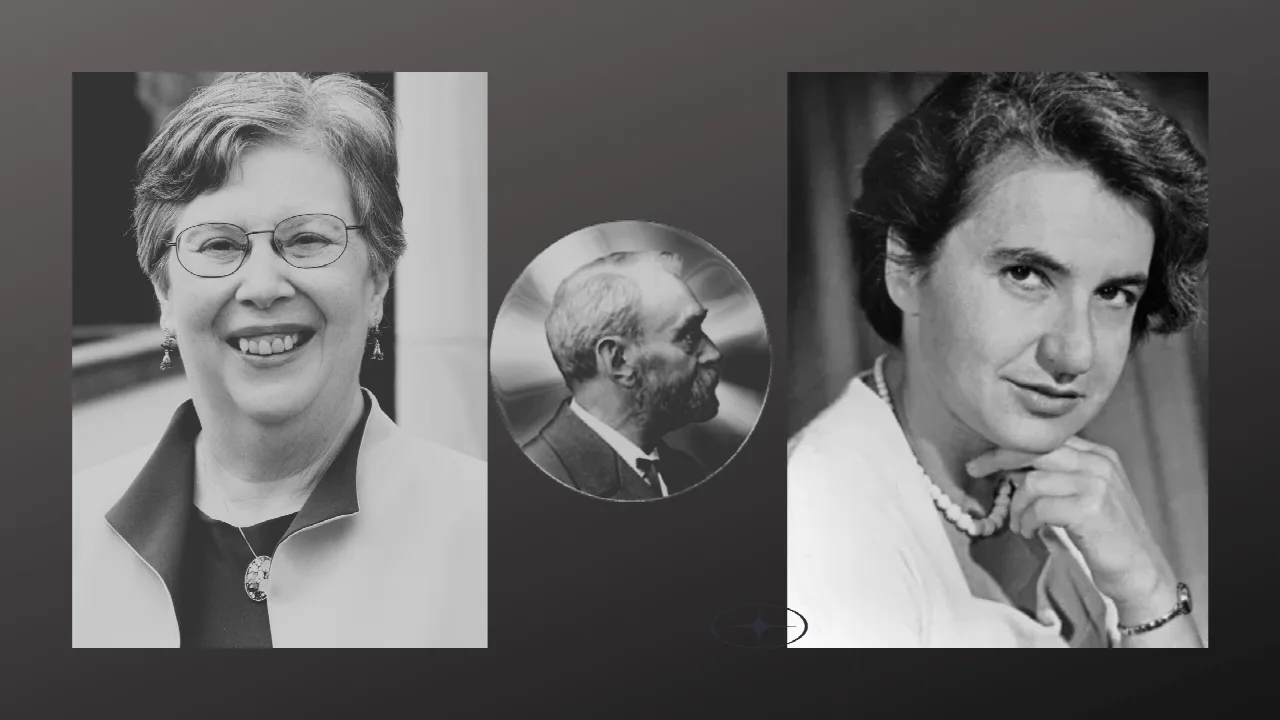
AlphaFold’s success depended on an experimental archive that Helen Berman helped build and sustain.
Read the story Developing frontier
From a proposed answer to a result that can be tested. Mathematics, molecules and environmental measurements offer different views of the same changing frontier.
5 articles Idea across disciplines
Gravitational waves and attosecond light pulses: two ways to ask what an instrument can reveal.
2 articles Idea across disciplines
How biological information is organised, read and passed on—from DNA and genomes to cells and inherited variation.
15 articles Problem in the world
Species, ecosystems, crops and adaptation: how living things respond to each other and to changing environments.
9 articles Developing frontier
Observing the cosmos, searching for life and asking what a distant signal can tell us.
9 articlesIdea across disciplinesAbstract structures, space and calculation—and how mathematical ideas become tools for understanding and building.
4 articlesTrace a question through the research that addresses it. Each connection leads to an explanation, evidence or a related problem.
Follow the connectionsOpen selected articles full screen. Move through the argument and its diagrams at your own pace, or switch to the full text.
Enter immersion1 + 3 + 5 + 7 + 9 = 5²
Each new layer adds the next odd number. The square grows by one row and one column.
There are no verified current openings listed. Browse the archive for past programmes and application requirements.
Visit the historical archiveSend a reported story, an explanation of your research or a reasoned perspective on science. Submit a pitch or draft for editorial review and track it from your account.